Safety, Risk Management and Compliance
Request Service
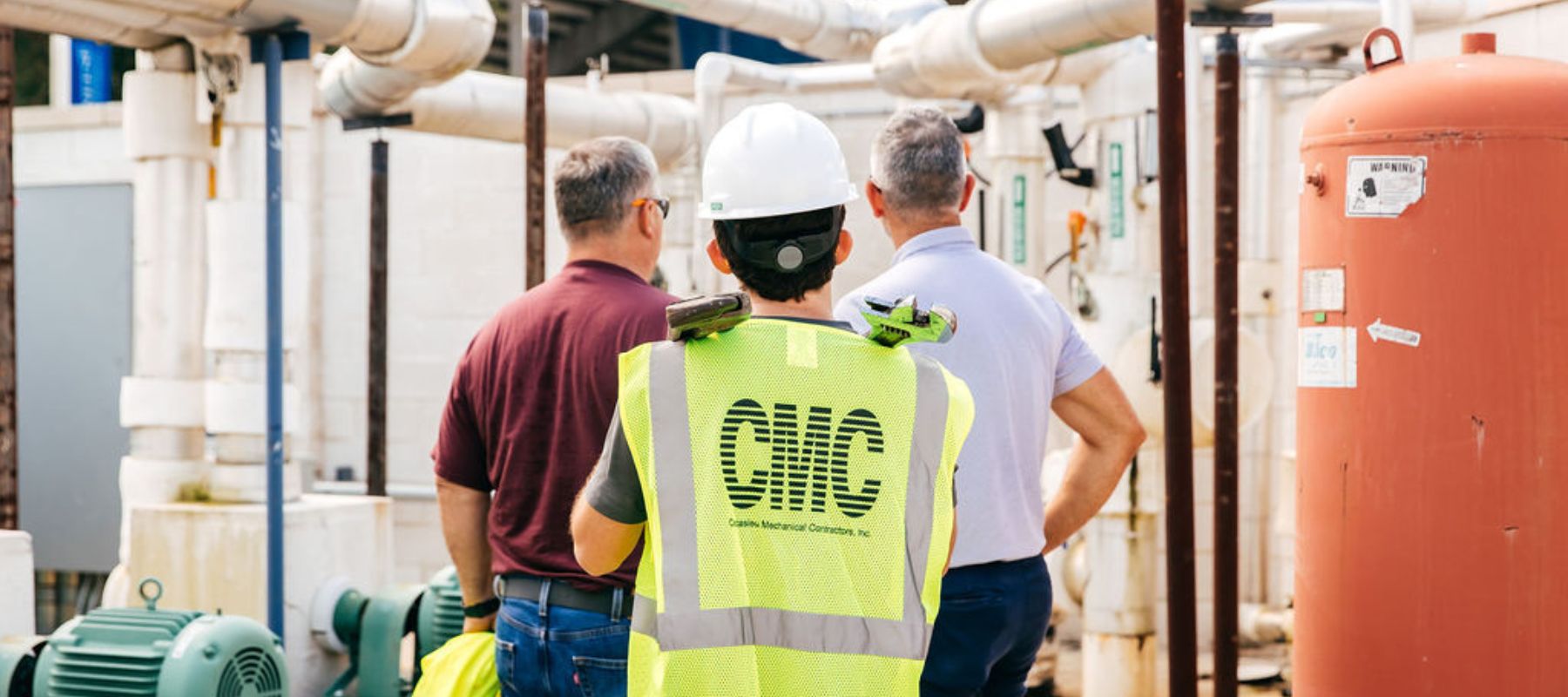
At Calcasieu Mechanical Contractors, Inc., safety is an integrated management function, not a peripheral program. Our work frequently occurs in operating industrial plants, mission-critical commercial facilities, and federal installations where regulatory compliance, operational continuity, and risk control are essential.
We structure our planning, supervision, and field execution to exceed safety standards on every project.
Safety Governance and Oversight
CMC maintains a full-time Safety Director with authority to implement and enforce company-wide safety policies and project-specific controls.
Responsibilities include:
• Development and periodic revision of written safety programs
• Oversight of OSHA compliance and regulatory updates
• Project-level safety audits and field inspections
• Incident and near-miss investigation with root cause analysis
• Corrective action tracking and documentation
• Coordination with owner and facility safety representatives
Safety oversight is documented, measurable, and subject to internal review.
Industrial and Federal Work Environment Experience
CMC routinely performs work in:
• Operating industrial and process facilities
• Active commercial buildings with occupied spaces
• Government and military installations, including Fort Polk
These environments require procedural discipline, security compliance, documentation control, and strict adherence to site-specific safety plans. Our personnel are experienced in integrating with owner permit systems, contractor safety orientations, and controlled access protocols.
We recognize that safety performance in these environments directly affects plant uptime, mission readiness, and regulatory exposure.
Pre-Construction Risk Assessment and Work Planning
Risk management begins during project planning, not after mobilization.
Prior to field execution, CMC:
• Reviews scope to identify critical risk activities such as energized systems, hot work, elevated work, and confined spaces
• Coordinates with owner and general contractor safety personnel regarding permit requirements and site-specific controls
• Evaluates sequencing to minimize exposure and operational disruption
• Implements task-level hazard identification and control measures
Field supervision reinforces these controls through documented safety meetings and ongoing monitoring.
Experience Modification Rate and Performance Monitoring
CMC tracks and monitors its Experience Modification Rate and internal safety performance indicators as part of its overall risk management framework.
Safety metrics are reviewed at both the project and executive levels to evaluate trends, identify exposure areas, and implement corrective measures when necessary.
EMR information is available upon request.
Regulatory and Contractual Compliance
CMC maintains compliance with:
• OSHA standards and applicable federal regulations
• Louisiana state safety requirements
• Owner-specific industrial safety programs
• Government and military installation requirements
• Contractual safety provisions and project-specific safety plans
We maintain written safety policies, training records, inspection documentation, and incident reporting protocols consistent with the regulatory environments in which we operate.
Documentation and Defensible Practices
CMC maintains structured documentation practices designed to support both operational control and defensible compliance.
These include:
• Written safety programs and procedures
• Training logs and certification records
• Jobsite safety meeting documentation
• Incident and near-miss reporting
• Corrective action tracking
• Coordination records with owner safety personnel
Our objective is not only to perform work safely, but to document compliance in a manner consistent with industrial and federal contracting expectations.
Workforce Accountability and Authority to Stop Work
All personnel are trained in applicable safety procedures including Lockout/Tagout, fall protection, confined space protocols, hot work controls, PPE standards, and hazard communication.
Supervisors are responsible for enforcement of safety requirements in the field. Employees are empowered to stop work if unsafe conditions are identified.
Safety performance is a condition of continued employment and project participation.
Integrated Risk Management Approach
Safety at CMC is integrated into project management, scheduling, supervision, and executive oversight. We recognize that incidents create operational disruption, regulatory scrutiny, reputational risk, and contractual exposure.
Our objective is proactive risk control through planning, enforcement, documentation, and continuous improvement.
We do not treat safety as a compliance formality. It is a core operational control.
Customer Reviews
Great company to work for !!! And to get your air conditioning needs

Blake Dowden
Delivered commercial AC units to them. Very quick unload and friendly, courteous employees. Only drawback is you have to back in from the road, which is a narrow, busy 2 lane. Other than that, 👍
Hector Olivas
What a great group of people, I been dealing with this group for 5 years, They’re # 1 in my book !!
Tommy Sirman
Great company with knowledgeable staff
Jeremy Tate